Elitefit is a premium wellness platform that supports members, trainers, nutrition (cafe staff) and operations in delivering integrated fitness, training, nutrition and recovery experiences.
As the business scaled, coordination across these roles became a source of friction, with data and workflows existing in silos and inconsistent experiences emerging for members and staff.
The project focused on designing a unified digital system that aligns these roles, reduces operational overhead and supports a consistent, scalable member journey.
Link
north_east
Product
Android, iOS, Web
Skills
Product design
Platform & Service Design
Stakeholder management
Interactive prototyping
User research & testing
My Role
Product Designer
(End-to-end ownership across experience, workflows, and system structure)
Timeline
Q4 2024 - Q1 2025
Team
Shishir K, Yulie Kost, Kristina Mir, N.Ali
Elitefit’s value lies in how seamlessly it functions when all the services come together along with operations. Customer success here then depends not only on training quality, but on how well scheduling, nutrition planning, recovery sessions and follow-ups are being coordinated behind the scenes.
The challenge was not to add more features but to introduce structure. The goal was to design a system that could absorb growth while preserving the studio’s high touch, premium feel given that the customer base was already reflecting that.
Platform at a glance
6-8 internal roles operating within a single ecosystem
300~ active clients scheduling across training, recovery, and nutrition
Business-critical workflows spanning acquisition, delivery, and retention
1.5k+ sessions handles across the platform
Ecosystem diagram with members at the centre, surrounded by trainers, café, front desk, operations, and management. Emphasises EliteFit as a connected system rather than isolated tools.
In today's world, people struggle to find the motivation and resources to pursue new hobbies and interests, leading to feelings of boredom, disengagement, and isolation. Furthermore, with so many options available, it can be challenging to find the right activity that truly resonates with you. In addition, there is a growing need for community and connection, especially as remote work and online interactions become more prevalent.
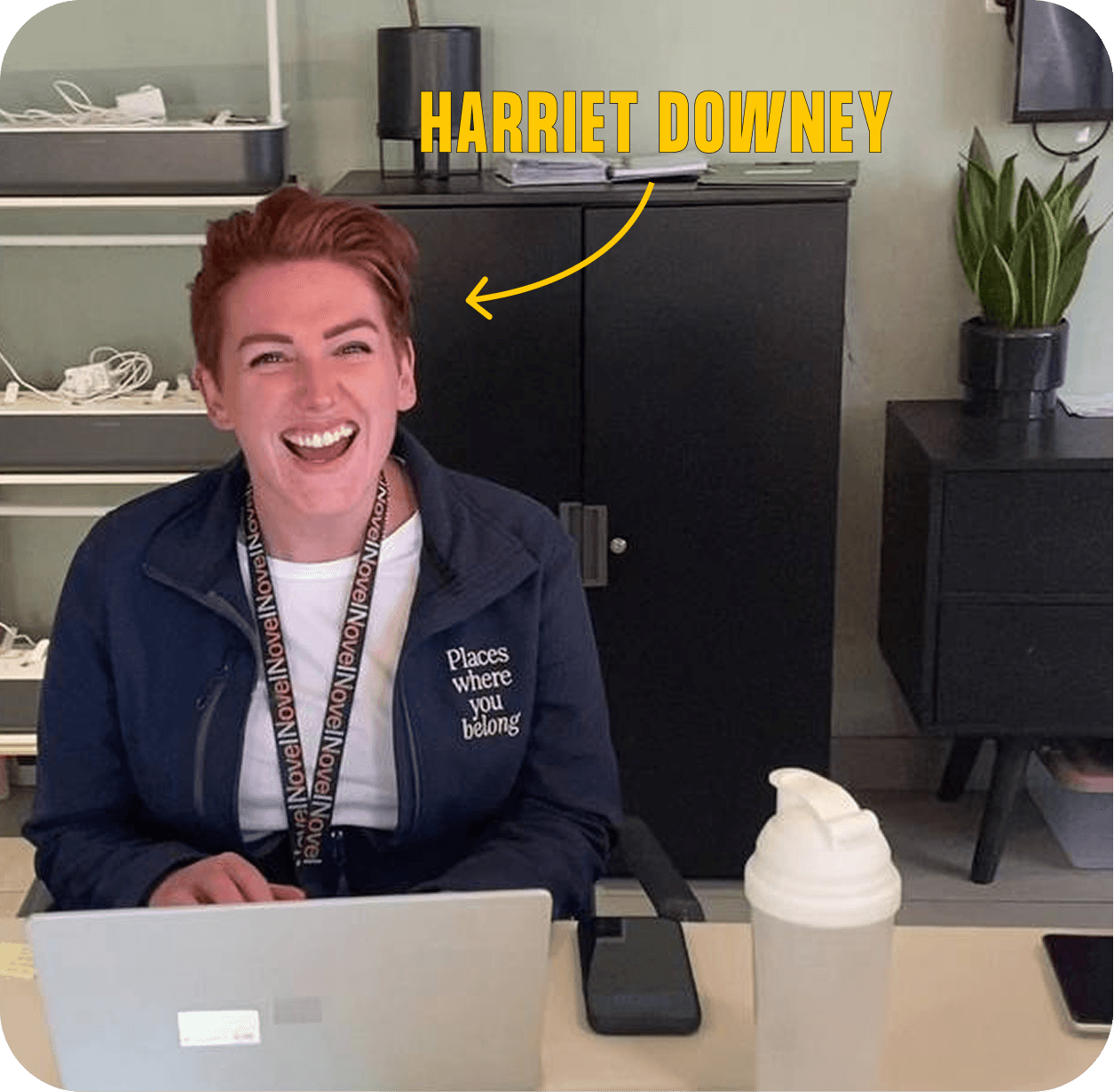
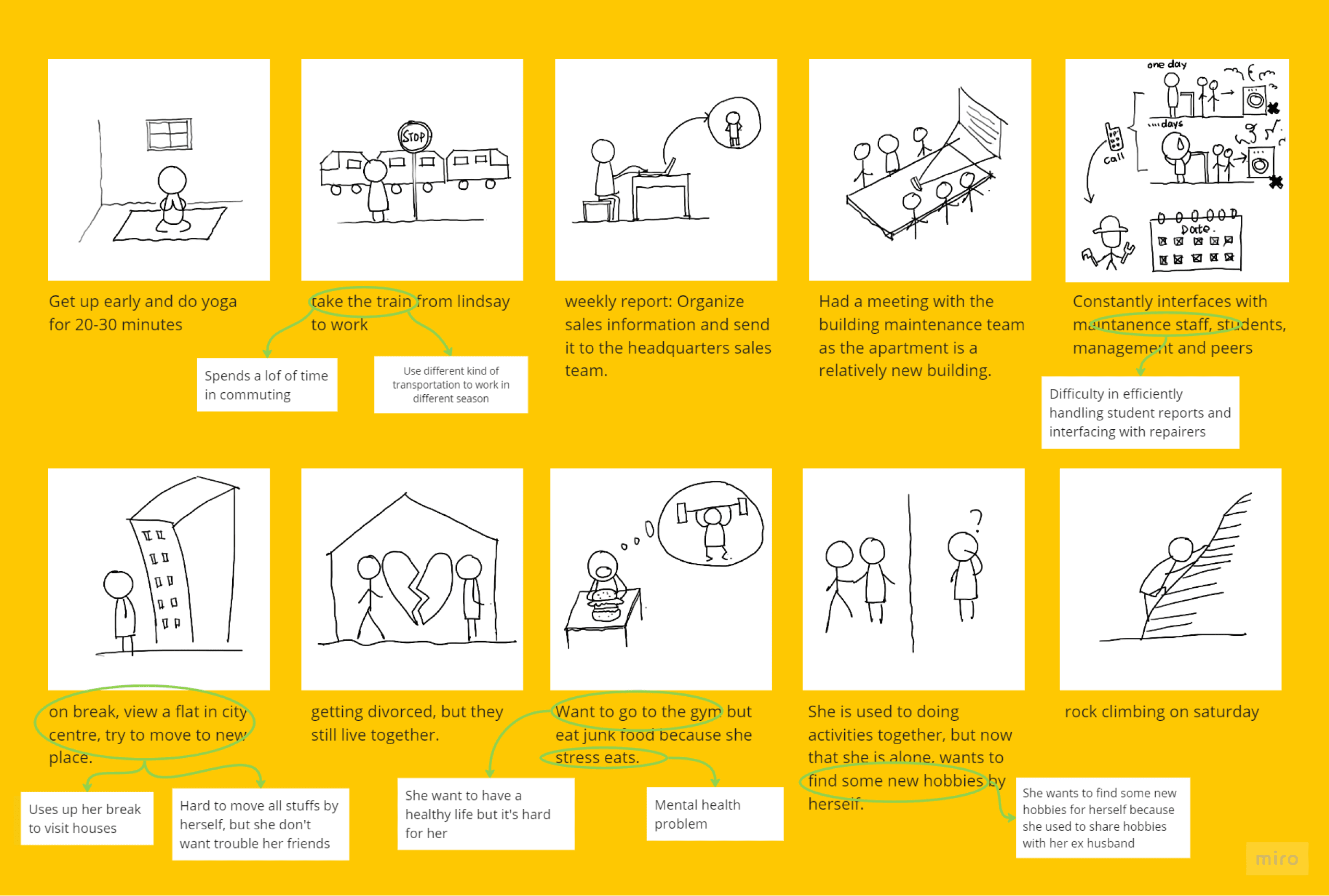
A real life example of Harriet helped in determining what an individual actually struggles with and how this service can help them with their needs and aspirations.
I studied Harriet, took her interview and then reached out to more people to gauge an idea of the scope this service might have.
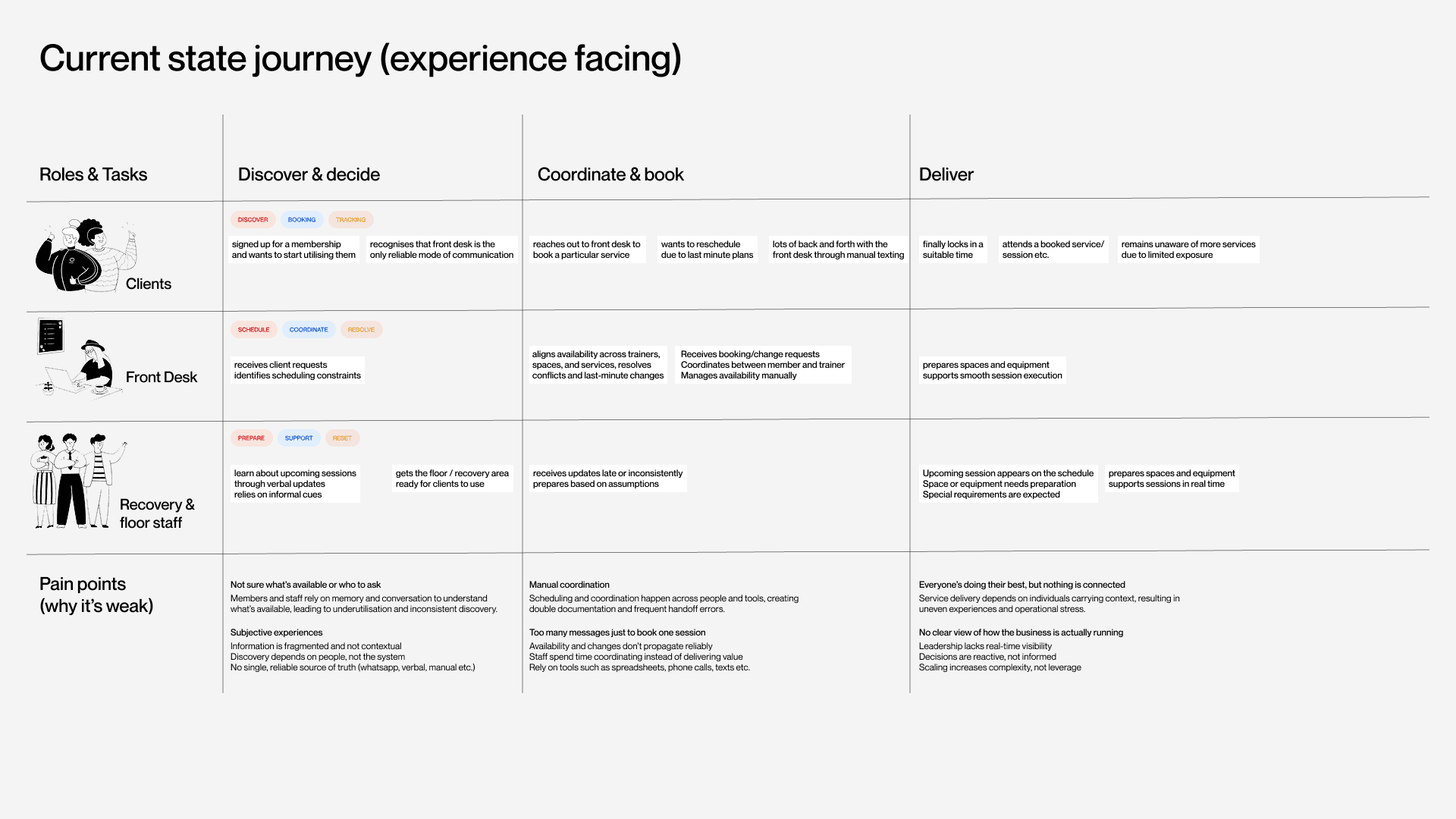
At first glance, EliteFit’s challenges could appear solvable with a collection of off-the-shelf tools one for scheduling, one for programs, one for communication, one for tracking. In practice, this is exactly how the studio was already operating.
The problem was not the absence of tools, but the absence of orchestration.
Design a unified system that aligns members, trainers, operations, and management into a single, coherent workflow.
Prior to the platform, several services operated with low visibility across the ecosystem, resulting in inconsistent and minimal usage. The aim of this project was to surface these offerings at the right moments, centralise workflows, and make the system reliable enough to scale.
Success metrics
Improve service visibility
Reduce manual coordination
Enable predictable operations
Support scale without added complexity
The system was breaking down due to fragmentation, not lack of effort
Through interviews across all six roles, it became clear that teams were coordinating around the system instead of operating within it.
The platform has 6 types of users, each with different goals and levels of technical literacy. Users were identified based on their key needs.
Then, we sketched out the IA on a high level to ensure it would integrate seamlessly with existing mechanisms
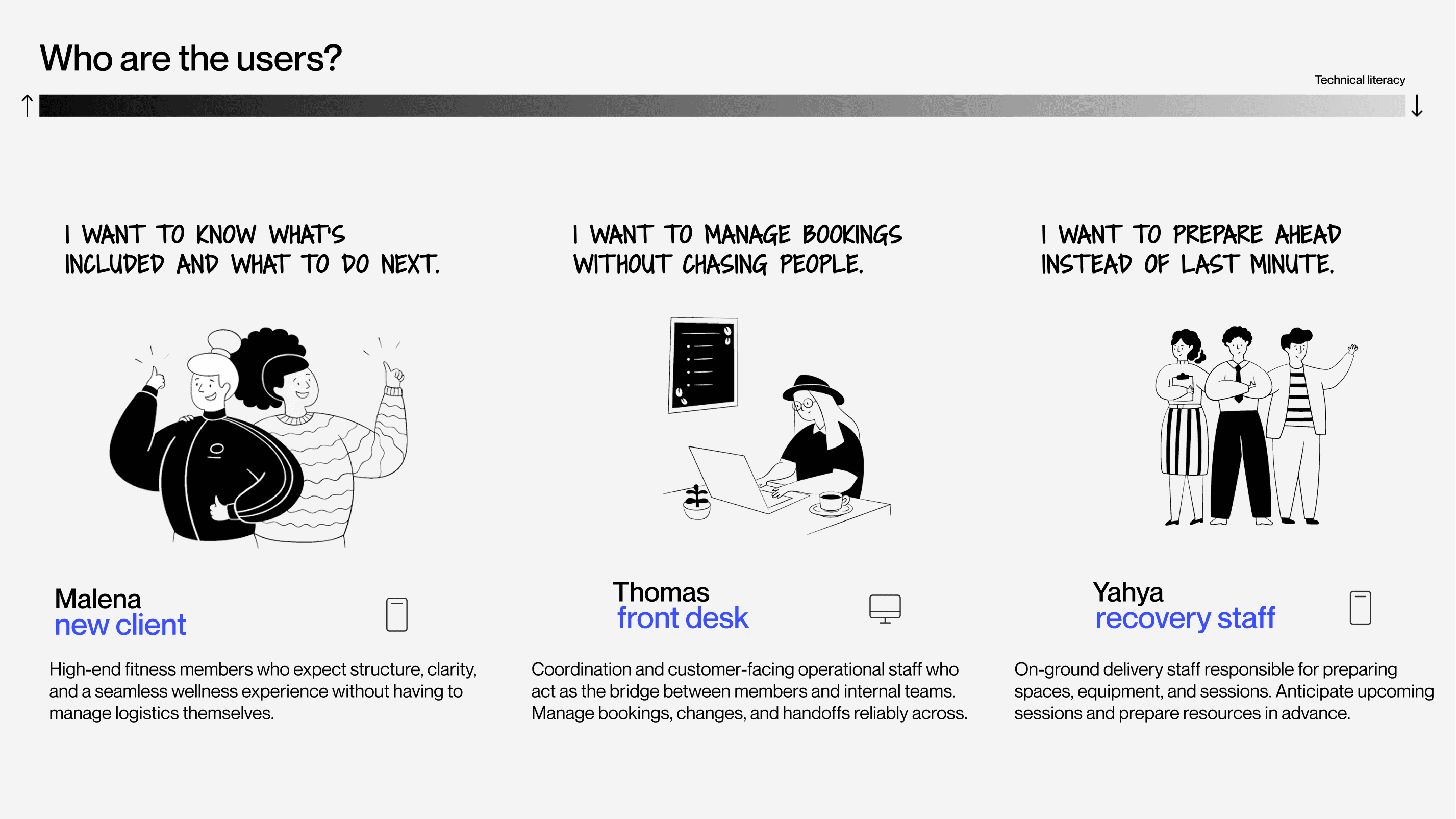
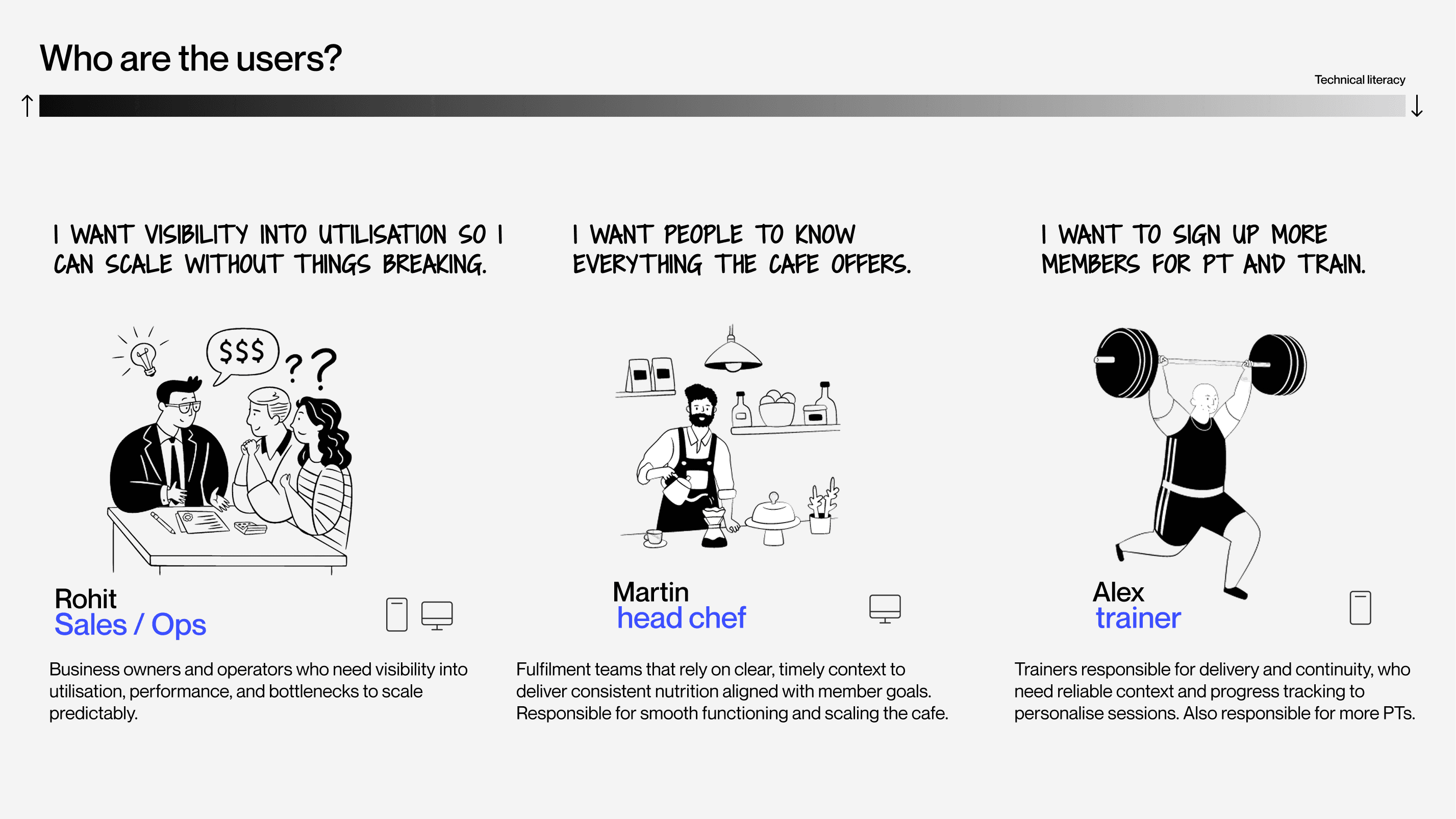
The focus shifted from isolated tools to how information should move across the system, where ownership should change hands, and where visibility was essential.
Two distinct layers emerged:
Members required a fast, low-friction experience without operational complexity
Internal teams required deeper workflows for coordination, fulfilment, and oversight
The system was designed as two tightly connected layers: a member-facing experience optimised for clarity and habit formation, and an internal operational layer supporting accountability and scale.
Make internal coordination invisible to members
Members should experience the system as seamless and calm, without being exposed to operational complexity. Design decisions prioritised clarity, speed, and minimal cognitive load on the member-facing side.
Create a single source of truth
Information should live in one place and flow across roles automatically. This reduced double documentation, prevented inconsistencies and ensured teams operated with shared context in terms of logistics.
Design for handoffs, not isolated tasks
Each role’s work impacts the next. Workflows were designed to support clear transitions between teams, making ownership explicit and reducing reliance on informal communication.
Prioritise reliability over flexibility
The system needed to work predictably everyday. Design choices favoured structured flows and clear constraints over highly customisable but fragile solutions.
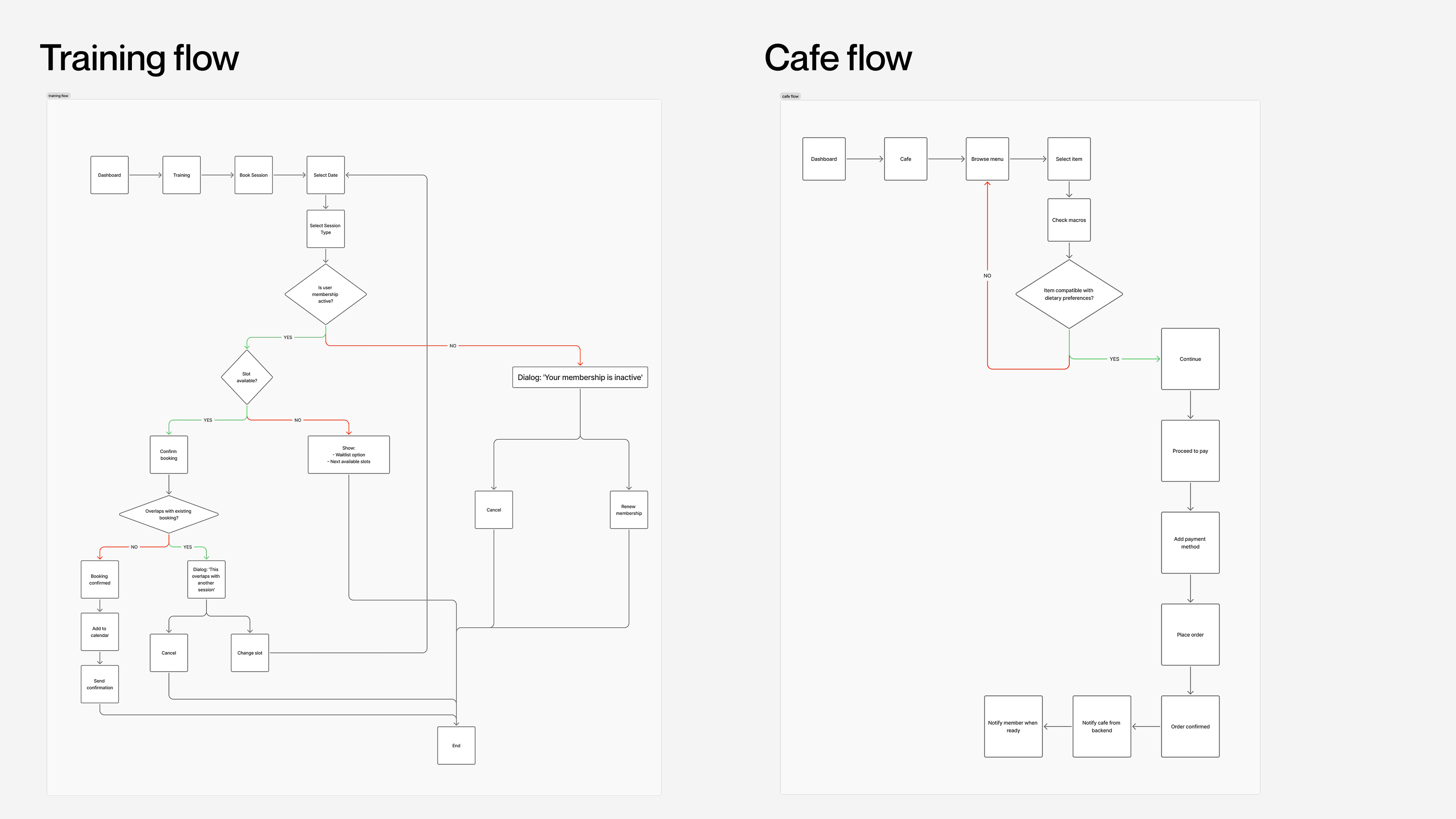
Structuring the platform around roles and responsibilities.
The platform was designed around how work actually flows through the business rather than around individual features. Each role interacts with the system differently, but all depend on shared data, timing and clear ownership.
There is clear separation between experience and operations.
The member facing layer focuses on speed, clarity and consistency.
The internal layer supports scheduling logic, program management, client data management, fulfilment and oversight. These layers are tightly connected through shared data points ensuring that actions taken in one surface are immediately reflected across the system.
Making structure feel effortless
For members, the system needed to feel calm and intentional.
The goal was not to expose the complexity of the platform, but to absorb it, allowing members to focus on their training and wellness without thinking about logistics.
The member experience was designed around a small set of high-frequency actions: booking sessions, managing training plans, ordering from the café, and tracking progress over time. These actions surfaced clearly and consistently, reducing the need for manual coordination or follow-ups.
Accountability was designed into the experience without being intrusive. Check-ins and progress indicators provided feedback loops that reinforced consistency, while keeping the interface lightweight and easy to navigate
Accountability was designed into the experience without being intrusive. Check-ins and progress indicators provided feedback loops that reinforced consistency, while keeping the interface lightweight and easy to navigate
Supporting coordination across teams
While the member experience was designed to feel simple, the internal system needed to handle complexity reliably.
Front desk and recovery teams gained real-time visibility into upcoming bookings and preparation needs. Trainers accessed schedules, programs, and member progress in one place. Nutrition and café operations received predictable orders with clear context.
Shows members at the centre, surrounded by trainers, café, front desk, operations, and management. Emphasises EliteFit as a connected system rather than isolated tools. Neutral, brand-agnostic diagram.
By aligning internal workflows within a single system, the platform reduced coordination overhead and allowed teams to focus on delivery rather than administration.
Within the first few months of operating with the platform:
3X Increase in service bookings
Services that previously averaged 5–8 bookings per month saw consistent, sustained usage once surfaced contextually within the member journey, indicating improved awareness rather than isolated spikes.
60% Reduction in manual coordination
Centralising bookings, schedules, and program data significantly reduced double documentation and back-and-forth across teams, lowering reliance on informal communication and manual follow-ups.
40% Faster operational turnaround
Shared visibility across roles reduced delays in session preparation, scheduling adjustments, and fulfilment, enabling teams to operate more predictably day to day.
Single source of truth established
Management gained a consolidated view of bookings, utilisation, and service adoption without interrupting daily operations, shifting decision-making from reactive to informed.
Designing EliteFit reinforced that complexity in service businesses rarely comes from lack of effort. It comes from fragmentation.
Designing for roles and handoffs, rather than individual features, allowed the system to scale without increasing cognitive or operational load. Constraints sharpened prioritisation and reinforced the value of clarity over optionality.
Most importantly, this project demonstrated that visibility is a design lever. Surfacing the right information at the right moment unlocked value not by adding new services, but by making existing ones reliable and usable.
Well-designed systems do not call attention to themselves.
They create the conditions for people and businesses to operate at their best.
And lastly, always document everything!